 Image 1 of 1
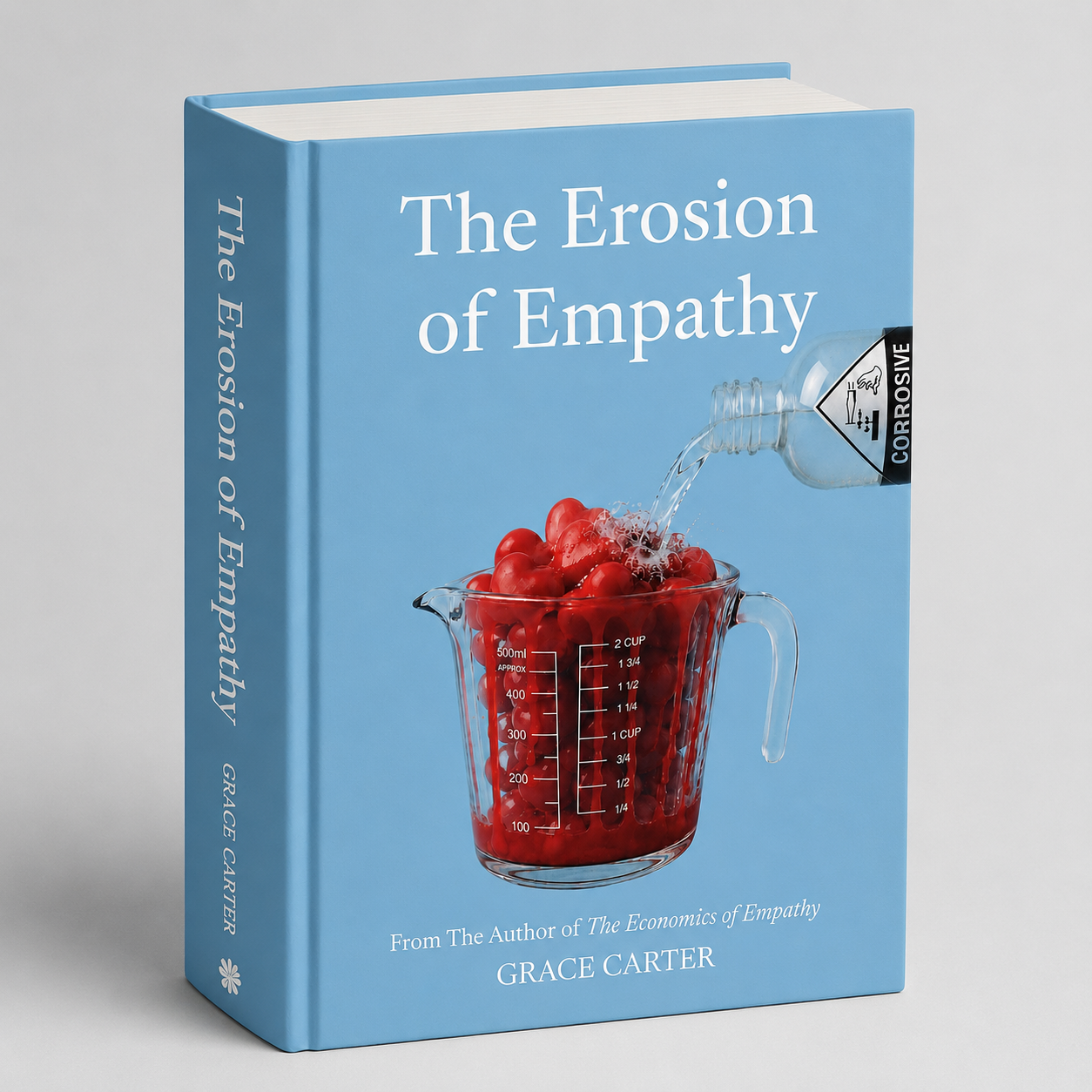
The Erosion of Empathy explores one of the most overlooked questions of modern life: are we losing our capacity to understand, connect with and care about one another - and, if so, what price will we pay in the future?
From healthcare and education to workplaces, politics, technology and the economy, evidence of an empathy deficit is appearing in places that initially seem entirely unrelated. Rising mental-health pressures, loneliness, disengagement, toxic workplaces, political polarisation and fractured social trust can look like separate problems. But what happens when we stop examining them in isolation and instead look for the common thread?
This book argues that empathy may be that thread.
Drawing on research across psychology, neuroscience, anthopology, biology, sociology, economics, history and beyond, The Erosion of Empathy explores how empathy developed, how it can be strengthened or diminished, and what happens when the environments in which we live continually place it under pressure.
Stress, time scarcity, competition, isolation, technology, inequality and relentless performance demands may not simply change how we behave - they may change the conditions under which empathy can flourish.
The book also challenges the assumption that empathy is merely a desirable personality trait or a “soft” virtue. Its consequences reach far beyond our individual relationships, influencing the health of our families, the effectiveness of our workplaces, the resilience of our communities, the design of public services and, ultimately, the strength of our economies.
But The Erosion of Empathy is not simply an argument that people are becoming less caring. Nor is it a call to return to some imagined, more compassionate past. Instead, it asks a more uncomfortable question:
What if the problem isn't that human beings have fundamentally changed, but that the world we have built is increasingly at odds with what human beings need in order to care?
By tracing the forces that have brought us here - and the consequences already beginning to emerge - the book reveals empathy not as a luxury, but as part of the infrastructure of a functioning society.
Because if empathy really is eroding, the question is no longer simply what we are losing. It is what it will cost us if we allow it to disappear, and when we’ll feel is ultimate consequence.
The Erosion of Empathy explores one of the most overlooked questions of modern life: are we losing our capacity to understand, connect with and care about one another - and, if so, what price will we pay in the future?
From healthcare and education to workplaces, politics, technology and the economy, evidence of an empathy deficit is appearing in places that initially seem entirely unrelated. Rising mental-health pressures, loneliness, disengagement, toxic workplaces, political polarisation and fractured social trust can look like separate problems. But what happens when we stop examining them in isolation and instead look for the common thread?
This book argues that empathy may be that thread.
Drawing on research across psychology, neuroscience, anthopology, biology, sociology, economics, history and beyond, The Erosion of Empathy explores how empathy developed, how it can be strengthened or diminished, and what happens when the environments in which we live continually place it under pressure.
Stress, time scarcity, competition, isolation, technology, inequality and relentless performance demands may not simply change how we behave - they may change the conditions under which empathy can flourish.
The book also challenges the assumption that empathy is merely a desirable personality trait or a “soft” virtue. Its consequences reach far beyond our individual relationships, influencing the health of our families, the effectiveness of our workplaces, the resilience of our communities, the design of public services and, ultimately, the strength of our economies.
But The Erosion of Empathy is not simply an argument that people are becoming less caring. Nor is it a call to return to some imagined, more compassionate past. Instead, it asks a more uncomfortable question:
What if the problem isn't that human beings have fundamentally changed, but that the world we have built is increasingly at odds with what human beings need in order to care?
By tracing the forces that have brought us here - and the consequences already beginning to emerge - the book reveals empathy not as a luxury, but as part of the infrastructure of a functioning society.
Because if empathy really is eroding, the question is no longer simply what we are losing. It is what it will cost us if we allow it to disappear, and when we’ll feel is ultimate consequence.